

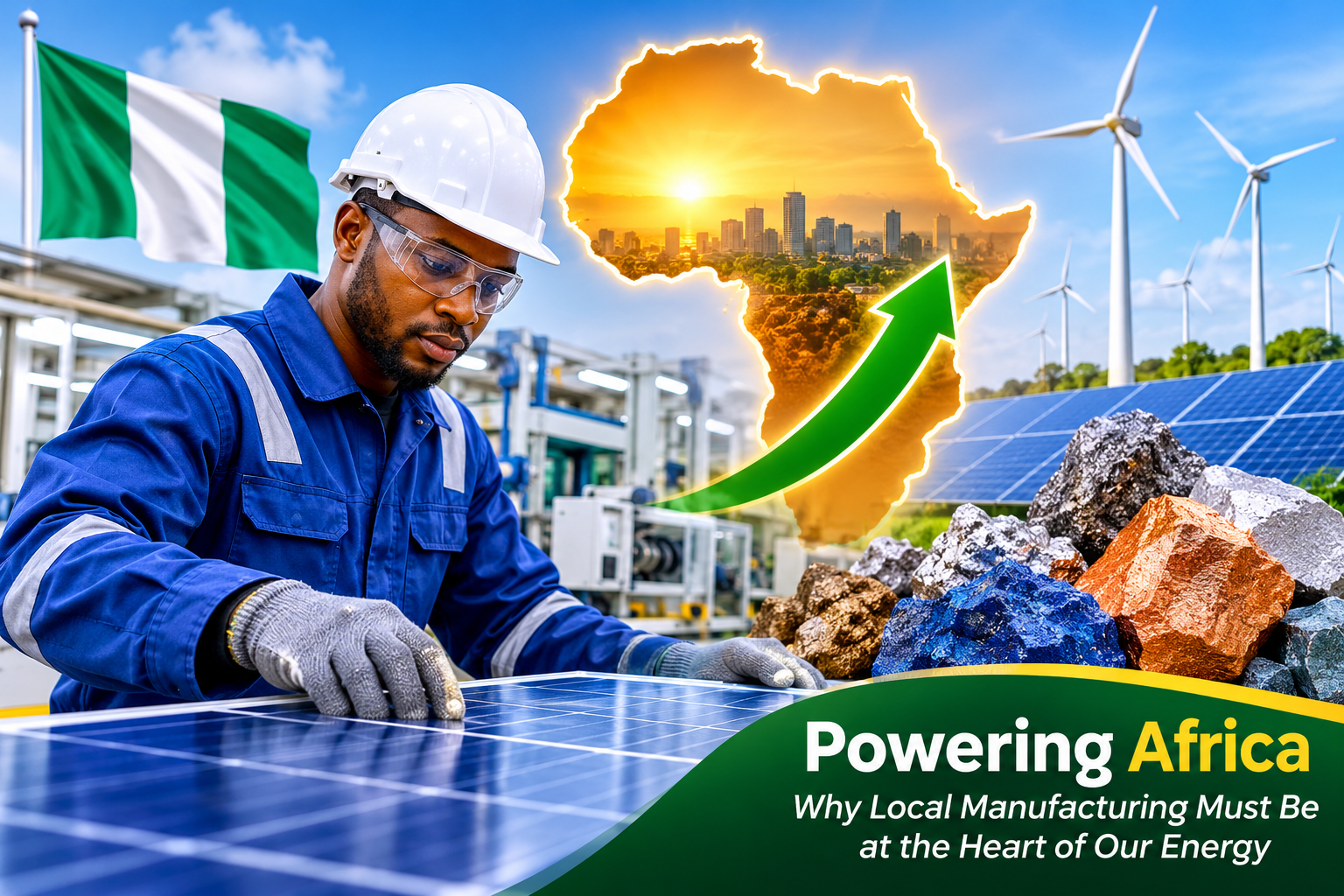
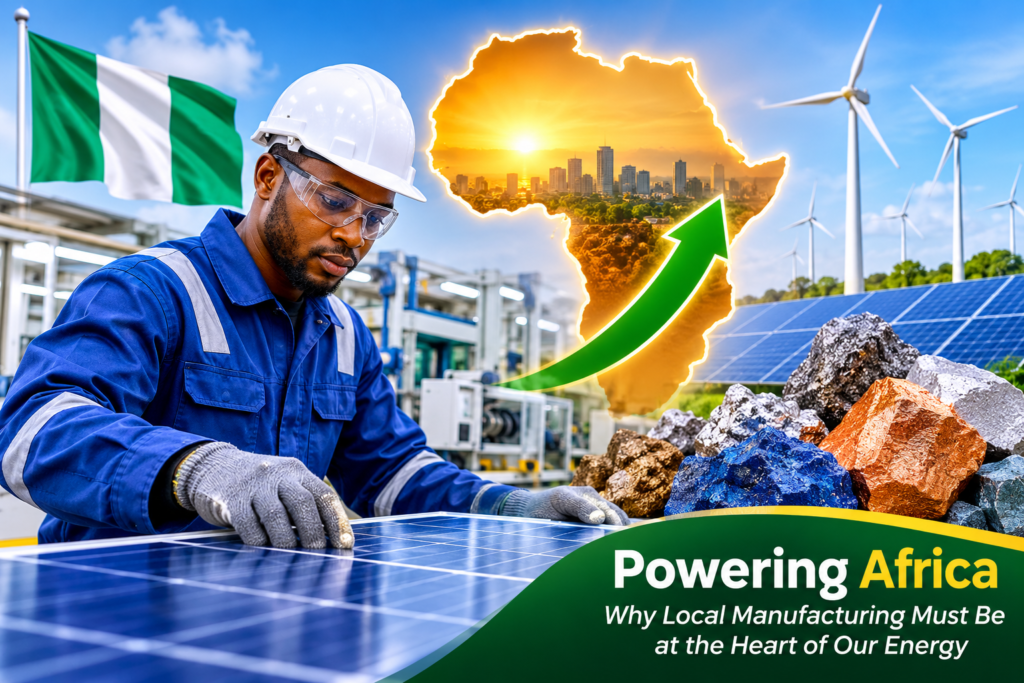
Africa continues to grapple with an electricity access deficit affecting nearly 600 million people. Yet, ironically, this same continent is home to some of the world’s richest deposits of critical minerals required to drive the global energy transition.
According to the African Energy Chamber, Africa holds significant deposits of energy transition minerals, including cobalt, lithium, copper and platinum group metals (PGMs), placing the continent in a strategic position to contribute meaningfully to global clean energy supply chains.
Despite this enormous potential, Africa remains heavily dependent on imported renewable energy technologies.
At the recently held virtual Pan-African policy conference, Turning the Lights On: Unlocking Circular Value Chains for Africa’s Renewable Energy Transition, Riyad Mehdeb of the United Nations Development Programme (UNDP) highlighted that Africa imports 94% of solar panels from China, with imports costing approximately $2.4 billion in the 12 months leading up to June 2026.
In his keynote, Mehdeb stressed the need to build stronger local value chains that would enable African countries to manufacture, repair and recycle clean energy technologies closer to home.
“Africa is about to be the largest clean energy system the world has yet seen,” he said.
At the virtual conference co-hosted by Warwick Business School and the Circular Economy Powered Renewable Energy Centre, Giuliana Battisti, Co-Director of CEPREC and Professor of the Economics of Innovation at Warwick Business School, equally stressed that Africa’s energy transition must deliver economic benefits alongside environmental gains.
“Setting the energy infrastructure is the foundation of any economic development,” she noted.
She further challenged African countries to develop leadership in energy generation by considering what can be produced locally, rather than remaining technologically dependent on overseas markets.
For decades, Africa has been well-positioned to export the raw materials needed to support manufacturing industries around the world, only to import the finished products at a premium.
The economic value expected to be retained by manufacturing more of our renewable energy technologies locally is enormous. Beyond reducing import dependence, local production presents opportunities for industrial development, technology transfer, skills development and job creation for our growing population.
This is particularly important for Nigeria, where our ambitions to expand electricity access, strengthen domestic industries and create sustainable employment must be accompanied by deliberate efforts to develop local renewable energy manufacturing capabilities.
In Nigeria, companies such as Auxano Solar, JRB Solar Investment Ltd and Ubacle Solar have taken encouraging steps towards domestic solar panel assembly and manufacturing.
For Nigeria and the wider African continent, the conversation must increasingly shift from simply deploying renewable energy technologies to asking how much of the associated economic value we can create and retain locally.
This requires intentional policies that encourage domestic manufacturing, access to affordable financing, investments in research and development, and stronger linkages between our mineral resources and industrial value chains.
For Nigeria, this is both an energy access imperative and an industrial development opportunity we must take seriously